Press
-
January 6, 2026
'Remove Netanyahu': MK Odeh calls all Arab parties to unite before elections
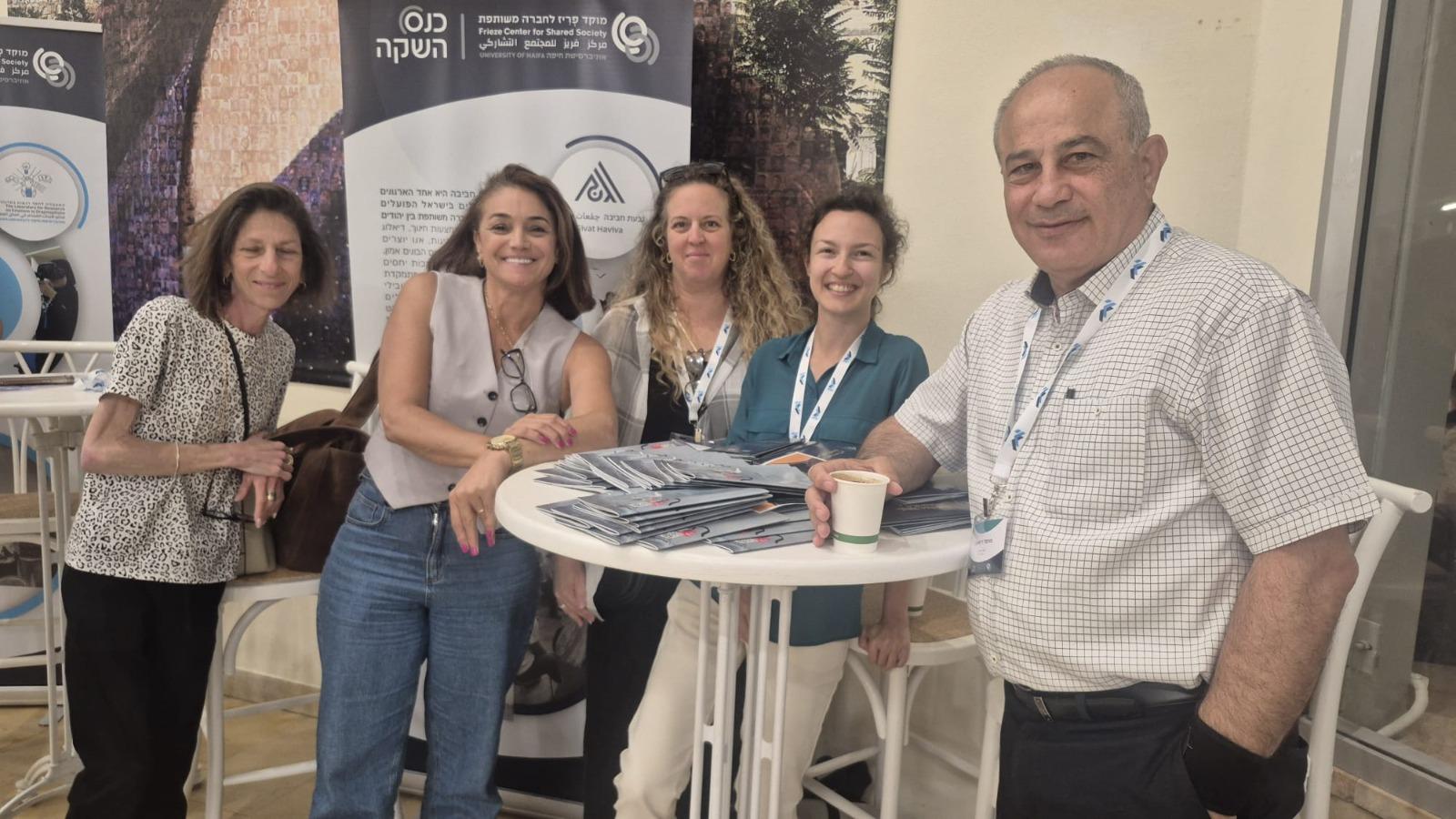
Hadash-Ta’al party leader MK Ayman Odeh, addressing the annul Givat Haviva Conference for a Shared Society, called on all Arab parties to unite ahead of the next elections. “Let us unite, all of us. Let us bring 17 mandates,” he said. “We just do everything, absolutely everything, to remove Netahnayhu,” Odeh emphasized. “The central struggle is over Israeli democracy as a whole, for all citizens, Jews and Arabs alike. This cannot be a sectoral struggle, but rather a struggle to build a true democracy,” he added. President Isaac Herzog spoke at the Conference for a Shared Society as well on Sunday, which was attended by members of Knesset, and called for unity between Jews and Arabs, specifically after the war. “Arab citizens of Israel are an integral part of Israeli society, and the State of Israel, and they are entitled, plainly, as a matter of right and not charity, to equality in the fullest sense of the word,” Herzog said. He added, “The lack of equality in Israel is a driver not only of the national challenge I spoke about, but also of a missed opportunity on a historic scale. Arab society may be the resource with the greatest potential, and at the same time the most underutilized, of the State of Israel.”
-
January 6, 2026
Erosion of Trust and Rising Pessimism: 76% of Young Arabs Feel Less Personal Security
54% of Arabs trust Jews, compared with just 26% of Jews who trust Arabs, Davar reports on the new Givat Haviva survey of Arab and Jewish citizens that was presented at the annual Givat Haviva conference for a shared society on January 6. The attitude gap is also reflected in willingness for social relationships: 31% of Jews are open to friendships with Arabs, while 69% of Arabs are open to friendships with Jews. The situation improves somewhat in professional settings: 58% of Jews and 81% of Arabs are willing to work in a shared workplace, and 51% of Jews and 80% of Arabs are willing to study together at university. “There is erosion of trust and rising pessimism,” said Prof. Mona Maron, Rector of the University of Haifa, who spoke at the conference. “Arabs want partnership; Jews are less willing. It’s difficult to talk about partnership under these conditions.”
-
January 6, 2026
‘They Deserve Equality’: Herzog Addresses ‘National Challenge’ of Violence in Arab Communities
Israeli President Isaac Herzog on Tuesday addressed violent crime in the Arab sector, describing the problem as a “national challenge” and blamed inequality, The Media Line reported. Speaking at a conference at the Givat Haviva center Herzog said, “The issue of crime, delinquency and the loss of personal security in Arab society in Israel is a national challenge in every sense.” He added, “The responsibility [for the issue] of the communities and Arab society itself of course has its place, but there is no replacement for the responsibility of the state.” Herzog stated the war between Hamas and Gaza also had a palpable effect and that the conflict was “especially fruitful for agents of hate, despair and chaos.” “Arab citizens of Israel are the flesh and blood of Israeli society,” he says. “They obviously deserve, by right and not by kindness, equality in the full sense of the word.” He identified the lack of equality as a factor in burgeoning violence and an “historic missed opportunity.”
-
January 6, 2026
Givat Haviva Partnership Index: Jewish-Arab Partnership
Givat Haviva Survey: Jewish-Arab Partnership The Partnership Index, Givat Haviva’s annual survey of Jewish and Arab citizens, found that Arabs society has seen an increase in optimism regarding living in partnership between Jews and Arbs to 45% today, compared to only 29% last year. In Jewish society, the number of optimists has dropped from 24% last year to only 16% today. "The data shows that the labor market and campuses are the main door to Jewish-Arab partnership. The increase in the Jewish public’s willingness to work and study together is important news. This is where daily encounters are created,” said Givat Haviva CEO Michal Sella. “The complexity we see, of relative openness at work and reluctance on a personal level, is an invitation for us as a society to invest in building trust.” Read the press release.
-
January 6, 2026
Givat Haviva Survey: Trust in Police, Minister of National Security
"The data reflects a dangerous process of disintegration of public trust in the entities that are supposed to provide security, and a serious harm to the sense of personal security,” said Givat Haviva CEO Michal Sella. The Partnership Index, Givat Haviva’s annual survey of Jewish and Arab citizens, revealed that 52% of Jews and 68% of Arabs do not trust the Israeli police. Regarding Minister of National Security Itamar Ben Gvir, 76% of Arabs and 60% of Jews say his performance is poor. And 59% of Jewish and 56% of Arab citizens report that their sense of personal security has changed for the worse in the past year. Read the press release.
-
January 6, 2026
Givat Haviva Partnership Index: Political Partnership
Political Partnership Blurb "The findings of the Partnership Index indicate a large gap between the centrist parties’ leaders and their electorate: While the centrist leaders are trying to disavow Arab Knesset members, a significant portion of their public is open to Jewish-Arab political partnership,” said Givat Haviva CEO Michal Sella. “Mathematically, ideologically, and morally, the only way for the Change Bloc to form a government is to not rule out cooperation with the Arab parties and not exclude every fifth Israeli from the political game,” said Givat Haviva CEO Michal Sella.