
January 20, 2026 | Source: Givat Haviva
Feature Story: Jenan Halabi Profile
Behind every educational program, intercultural meeting, and cultural festival at Givat Haviva is a team of individuals deeply committed to our mission, not just as educators or organizers, but as living models of shared society.
In this series, we'll get to know the people behind the work—who they are, how they found their way here, and what keeps them motivated during challenging times. Each month, we'll spotlight one team member, because understanding Givat Haviva starts with understanding the people who shape it.
By Sami Jinich
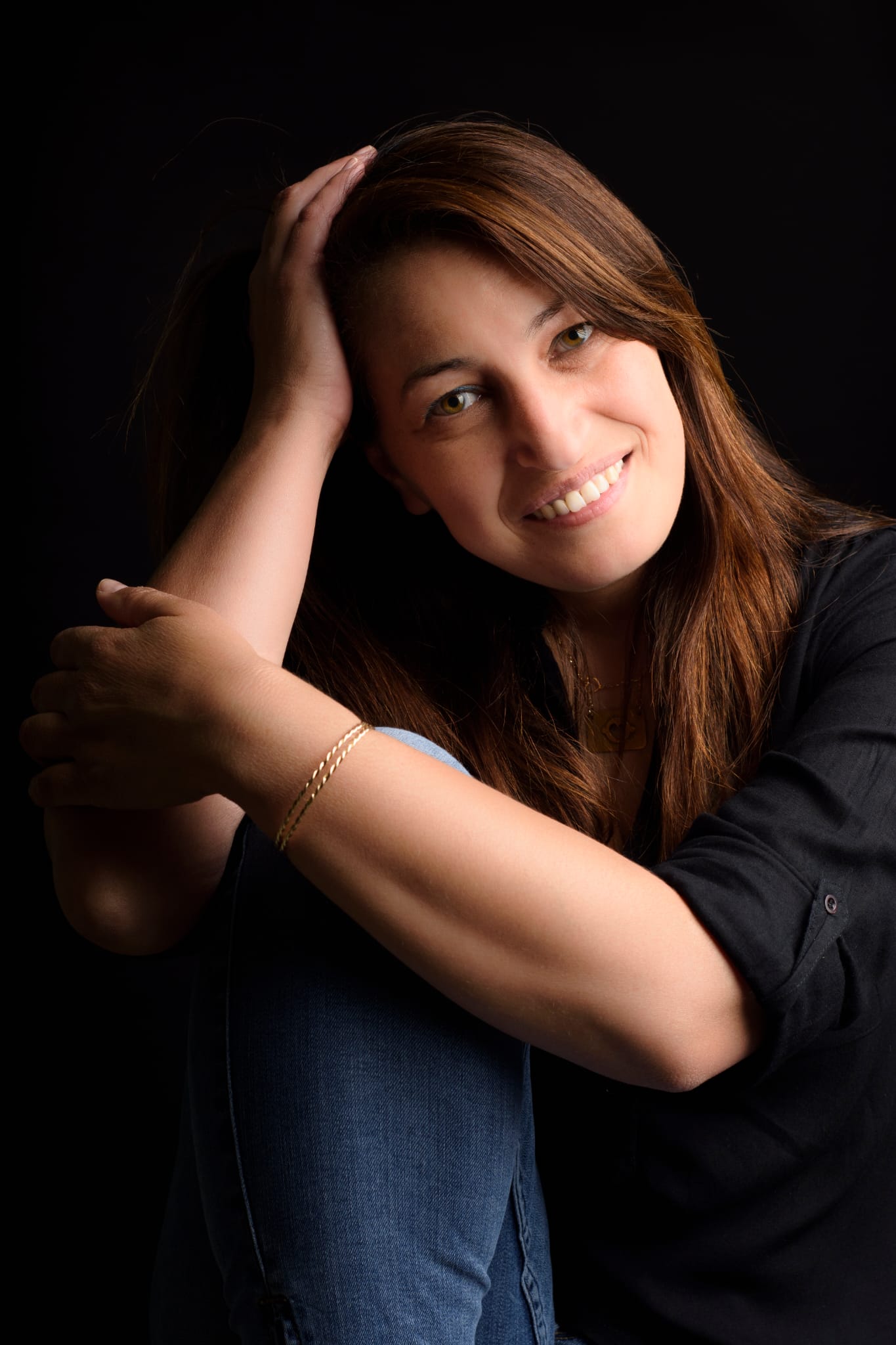
Working with Jewish and Arab teenagers at Givat Haviva, Jenan Halabi has come to see photography as more than a skill or an art, but as a tool to open conversations about identity, belonging, and shared life—especially in moments when words fall short. “At first I came as a photography teacher, and from there I developed into something completely different,” Halabi says.
Halabi grew up in Usfiya, a village perched on the slopes of Mount Carmel. While the majority of its residents are Druze, the village is also home to Christian, Muslim, and Jewish families. She describes her childhood there as idyllic. She studied with Muslim and Christian classmates, and to her these relationships always felt natural and self-evident—simply part of everyday life in Usfiya. She grew up in an environment where friendships across different faiths and communities were taken for granted, a lived reality of shared life that required no explanation.
But that sense of ease cracked when she began commuting to an Orthodox Arab school in Haifa.
“There was an uncomfortable feeling in the air on one particular day,” she recalls. “We didn’t feel comfortable, and I didn’t understand why. But then I understood that for the other students, it was the Nakba.”
For many Druze families, celebrating Yom Ha’atzmaut is normal, as is mandatory service in the army. For the first time Halabi saw how this created a rift between her and her classmates. “Some students said very harsh things, like that we aren’t real Arabs,” she says. “But walking home that same day, a Jewish man bumped into my Druze classmate and called us all ‘dirty Arabs’.”
The experience left her confused and questioning where she belonged, something words couldn’t easily explain or resolve. Those questions lingered, unresolved, for many years. In the meantime, Halabi continued her education, bought her first camera as a teenager, and discovered a new favorite hobby. She worked a series of jobs, met her husband—also Druze, whom she met while he was serving in the army—and together they are raising four children.
She also earned a bachelor’s degree in Life Sciences. “I worked in all kinds of jobs, but photography always remained my hobby,” she says.
Eight years ago, “I decided, that’s it. I’m going to do only what I love—I’m going back to photography.” She left her job, returned to school, studying graphic design and photography at the Tiltan School of Design in Haifa, and began teaching photography at Tiltan. She later completed a second bachelor’s degree in Art as well.
Then came COVID in March 2020.
“Photography is something you have to teach outside,” Halabi explains. “By the sea, in nature, in classrooms.” When that became impossible, she moved her courses to Zoom. Soon after, she learned that Givat Haviva was looking for a photography teacher to lead the Through Others’ Eyes program, a dialogue-driven program that uses photography to bring Arab and Jewish teenagers together for a yearlong process of learning, dialogue, and a shared exhibition.
As soon as she learned about the program’s mission, Halabi was sold. “I came to Givat Haviva and started getting to know it more deeply—what’s the agenda, what does it promote—and I said to myself, wow! I’ve been dreaming about this since I was fourteen. And now I’m fulfilling that dream. The ability to connect through art is something I really, really love.”
Since joining the Givat Haviva staff in the fall of 2020, her role has expanded beyond teaching students how to take photos. Halabi took advantage of Givat Haviva’s many workshops on mediation and dialogue, learning how to navigate difficult conversations productively. Even before October 7, 2023, political tensions entered the classrooms. During the unrest of May 2021, when the Hamas-Israeli conflict led to violent clashes between Jewish and Arab citizens of Israel, the strain between Jewish and Arab students became impossible to ignore.
“We didn’t give up. We were teaching on Zoom because of COVID, but we brought them here, to Givat Haviva, opened the topic, and they talked to each other and cried. Then they hugged, and we left feeling like we did something good for the kids, because we gave them space to talk and unload,” she says. “Then I started to understand how meaningful it is that they meet, talk, and understand each other, even if they don’t agree.”
Over time, Halabi also reshaped the photography course. Previously, students took pictures throughout the year and chose images for the exhibition at the end. “But photography requires a process,” she notes. She expanded the curriculum to emphasize planning, writing, photographing, then sharing and reflecting. The aim is to tell a story, to explain what one sees, by intentionally framing a photo.
“There was a big surprise for me,” Halabi reflects. “That I can affect children not only through photography, but through shared living, values, identity, criticism, and the freedom to speak and express oneself. That carries a very big responsibility. At first I came as a photography teacher, and from there I developed into something completely different.”
Through its international exhibitions in the U.S. and Europe, Halabi hopes Through Others’ Eyes can show the world the complexity of Israeli society. “The missiles don’t discriminate,” she says. “We are here together, through the good and the bad.”
“I envision a future of this program in which we stop needing to talk about wars and talk about things that actually interest teenagers,” she says. “Until then we will continue to work so our exhibitions will travel more, both in Israel and around the world.”
Halabi describes one image from last September’s tour in New York that sticks with her. A girl has drawn a house on the floor and lies inside its outline. “Everyone loved it,” she says, “Some people even cried when they saw it. And here in Givat Haviva, there’s no one who saw the photo and didn’t react.”
In moments of confusion and revelation—when words alone can’t console or explain—Halabi is teaching the next generation where meaning can be found.
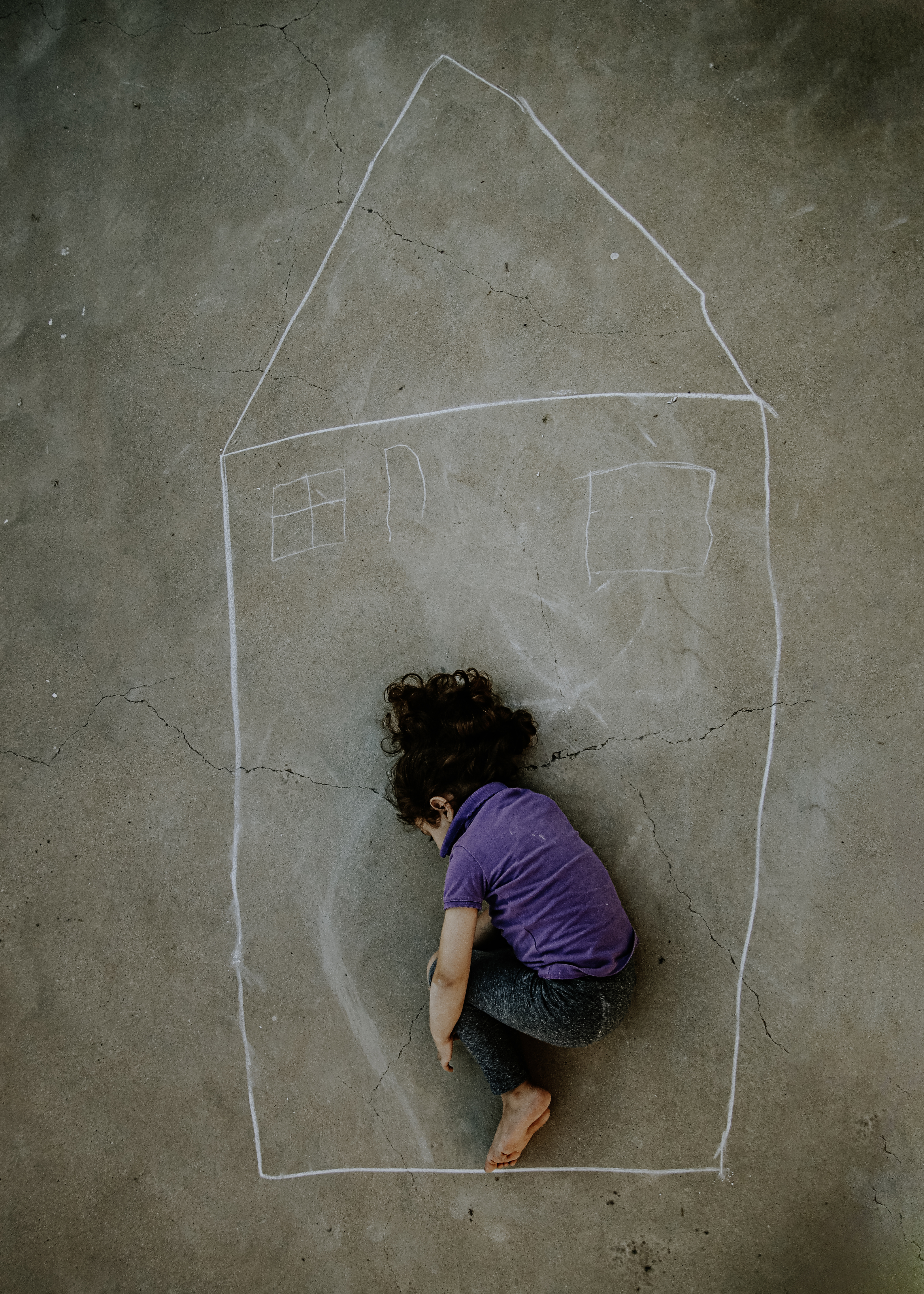
Photo by Noor, one of the students in the 2024 cohort of the Through Others Eyes program
Sami Jinich recently moved to Israel from Maryland, working as Assistant to the Director of Strategy in Givat Haviva and as a Community Educator at the Younited International School, with support from the New Israel Fund’s Shatil Social Justice Fellowship.